As a self-described film nerd, being able to read Roger Ebert’s rules for “reading” movies and employ them myself is a treat. My dad actually dressed up as him for Halloween last year! Ebert was a highly respected voice in the film sphere: his reviews were some of the most well-trusted and accessible forms of film criticism to date. Anyone would read his reviews, from deep-rooted New Wave nerds to budding cinephiles such as myself.
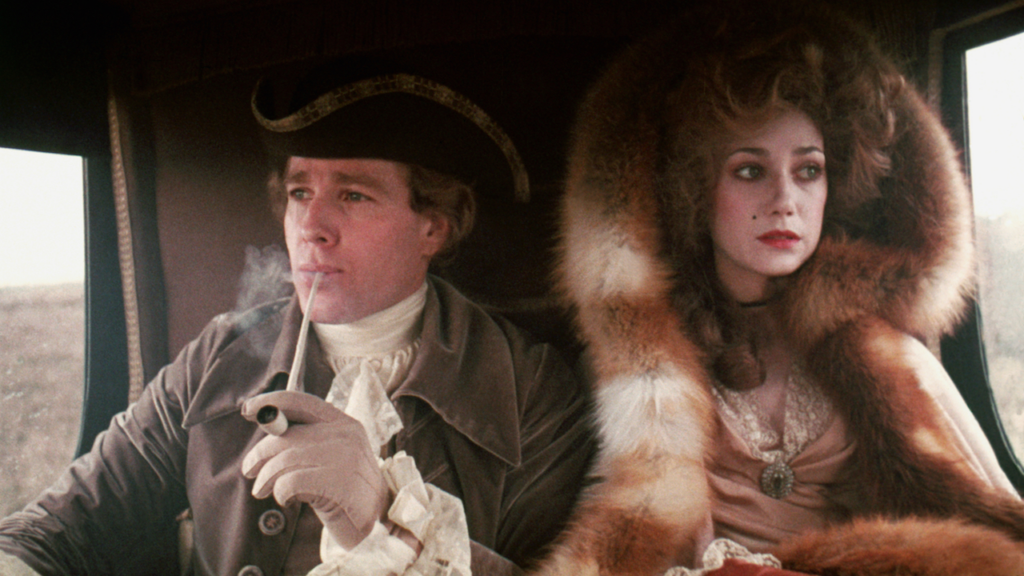
Let’s apply the concepts he discusses in the article to the videos provided! Naturally, I picked the examples of Kubrick’s use of One-Point perspective. This shot has been done to absolute death in recent years, but to me, Kubrick’s always stood out. Many of his characters stand and move within large spaces, contained by walls and other barriers. At the same time, the tilt effect mentioned by Ebert can be seen, such as the camera tilting down on Danny in The Shining or up at Jack, hinting at their differing power levels within the narrative. Otherwise, when placed at far angles, Kubrick’s characters are dwarfed in the landscape, while remaining confined: perhaps by codes of law, societal norms, or the wrathful spirit of the Overlook Hotel.
Now, applying Ebert’s rules to a more contemporary director, Quentin Tarantino. Tarantino is known for his trademark low-angle shots where characters are often interacting above the camera. This can be seen in movies like Inglourious Basterds, Pulp Fiction, and Kill Bill. A favorite of mine is the classic: “This must be my masterpiece,” shot in Inglourious Basterds, after Brad Pitt’s character carves a swastika into the forehead of Christoph Waltz’s Hans Landa.
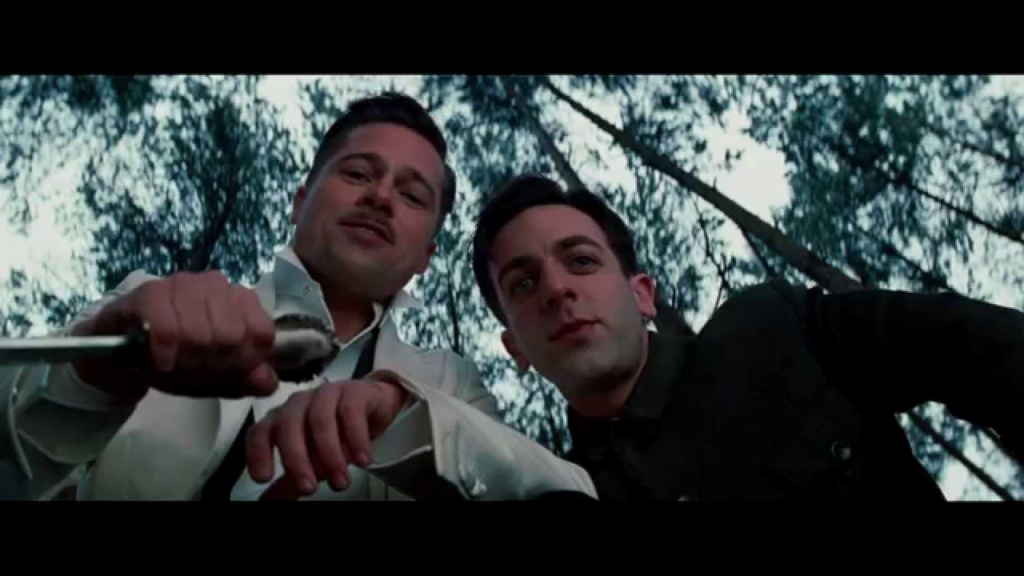
In the article, Ebert notes that this sort of shot is entirely based on power. In fact, he uses the words “gods” to describe the downward gaze often accompanying this composition and the resulting effect it has on the viewer’s impression of the characters. The shot reinforces power dynamics, and in this case, a triumph of good over evil.
Thus, Ebert’s ideas of general visual literacy and breaking compositions down into their most abstract parts are extremely useful to understand the dynamics of any scene without knowing the context: hence why Ebert believes his method should be effective in drawing out the meaning of a scene even without knowing any of the plot or setup. To me, that is why directors like Kubrick, Kurosawa, and others with intense focus on getting composition right are some of the most effective. To me, intent is everything.