
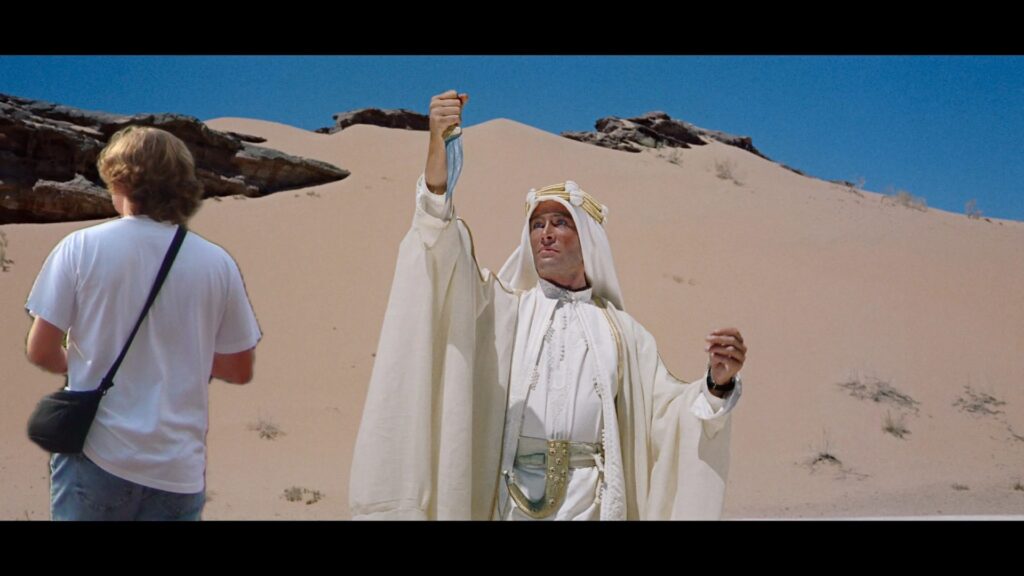
One of the greatest experiences I’ve ever had watching a film was seeing David Lean’s iconic 1962 masterpiece, Lawrence of Arabia, at the AFI Silver theater in Silver Spring, Maryland. It was a beautiful summer day, and some friends and I drove up from Virginia to this special theatre to see this special film projected in 70mm. As the lights dimmed in the stunning Silver theatre and the overture played, we began our journey into the most engrossing, stunning film I have ever seen.
Lawrence of Arabia follows the story of the titular historical figure as he organizes the Arab Revolt of World War 1 against the Ottoman Empire. The historical Lawrence and the one dramatically portrayed by Peter O’Toole face personal troubles as they are pulled between their allegiance to the people they fought for and the colonialist ambitions of the Western world. Lawrence, for all his hubris and heroic courage, is filled with a sense of self-loathing unlike any character in cinema at this point in history. It is further implied in the film that Lawrence is a homosexual, something which has been speculated upon by scholars of his real-life counterpart. This further serves Lawrence’s inner conflict in the film.
As Lawrence travels throughout the film, he seems to deepen in his despair and disillusionment with the world. Where, at the beginning of his endeavor, we see Lawrence as an almost spiritual figure: pristine, pure, shimmering, by the end, Lawrence has fully descended into madness as he grasps his inconsequential role in history. Lawrence becomes a blip, a footnote, and his ideas of a unified Arab state crumble in the face of division and encroaching Western authority. In short, the death of Lawrence is not of the mind or body, but of the ego. The film thoroughly dismantles the illusions that white saviorism imparts on people who truly want to do good, and judges Lawrence as a naive, egotistical, and reckless figure.
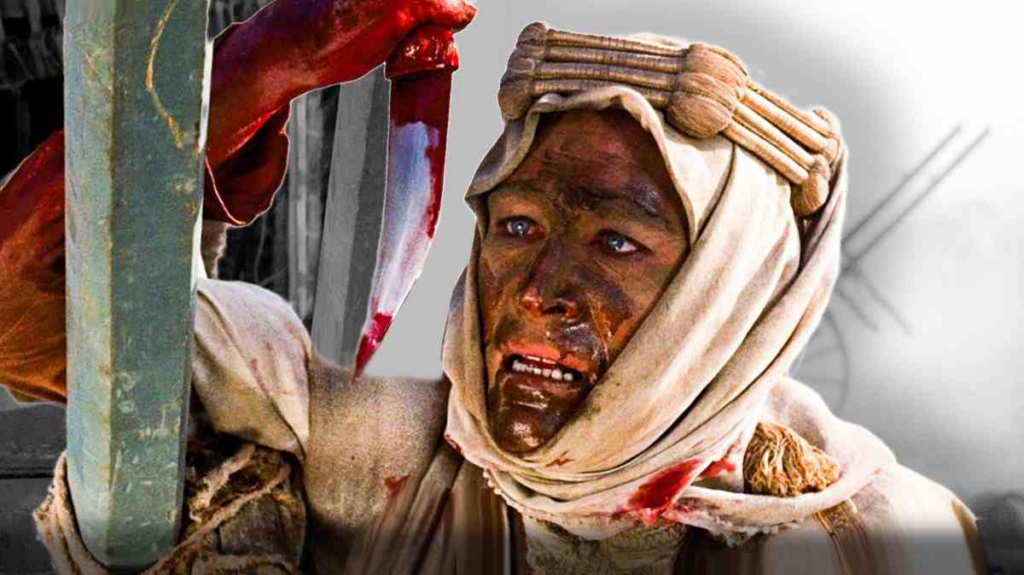
What serves this film best is its scale. In typical epic fashion, the film is four hours long and doesn’t drag a minute. As with any real desert, you lose track of your place within it all. Throughout the film, Lawrence and his comrades are dwarfed by landscapes of immeasurable scale. Cliffs, dunes, and the red sky blend to create one of the most, if not the most beautiful images ever put to the screen. In the same grandiose scale, the actors bring their most classical, over-the-top chops to bear in frame. This is the epic that all others are judged against.
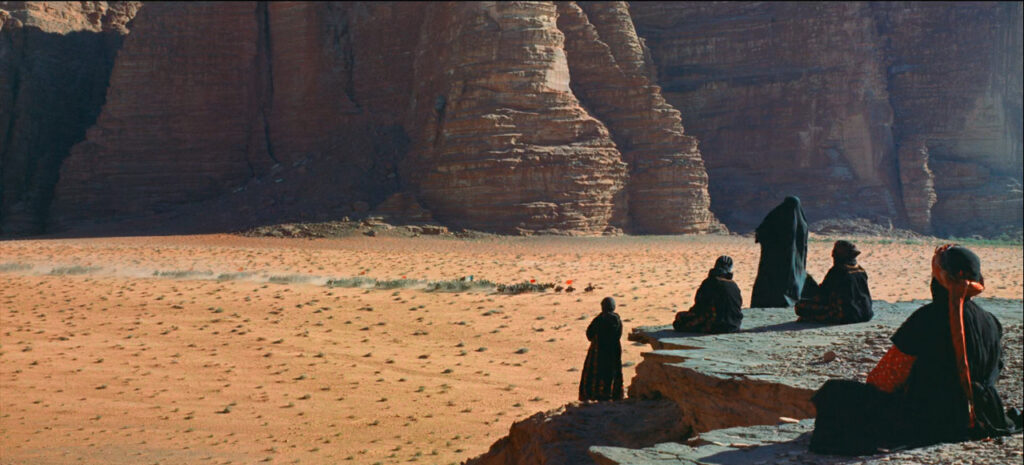
This immensity carries over into the score, composed by Maurice Jarre. Sweeping strings and deafening horns rang out, again dwarfing my friends and me amongst the towering, colossal environment the film had created within the theatre. Lawrence is a man who many would consider a great man, at least in terms of his military achievements during this period, but what did he actually accomplish? Nothing. He was merely a step stool, a colonial cog in the machine which could not be stopped, even by him. This sheer scale makes the audience look inward upon themselves and ask that same question. Who am I in all this?
But this film certainly has issues, and because of those flaws, it is a product of its time. Many of the film’s Arab characters are, sadly, not played by Arab actors. Some of them are, such as Lawrence’s friend and partner, Ali, but others, such as Prince Feisal, are played by white men. This is highly problematic and, although this film has the best intentions, it means that many people simply won’t seek it out. I respect that decision, because having these actors in these roles is deplorable. The issue is that although the film critiques the white savior and the colonial apparatus, these terrible decisions blemish the effectiveness of that message, and as a result, those messages do not reach the many people who have seen this film. Have you seen Lawrence of Arabia? What do you think? If not, I highly recommend giving it a watch on the biggest screen you can.